You know your horse best.
You know your
horse best.
I’m here to help you protect them.
I’m here to help you
protect them.
As a horse owner or caretaker, you make hundreds of small decisions every day. You notice how they move, how they eat, and the subtle shifts in mood that others might miss. Behind all of it is the hope that you are doing enough to keep them healthy, comfortable, and safe from serious problems like colic or ulcers.
There is a vast amount of information available nowadays, which in itself can feel quite overwhelming and sometimes even confusing. At the same time, veterinary care is naturally centred on the immediate problem that needs attention at that moment, which can make it challenging to gain clear guidance on what could be improved earlier to help prevent avoidable problems.
The difficulty is not just the volume of advice, but determining what is truly reliable and how to adapt it to your horse’s specific needs—rather than trying to follow ‘perfect’ theories that frequently fail to align with the realities of daily life.
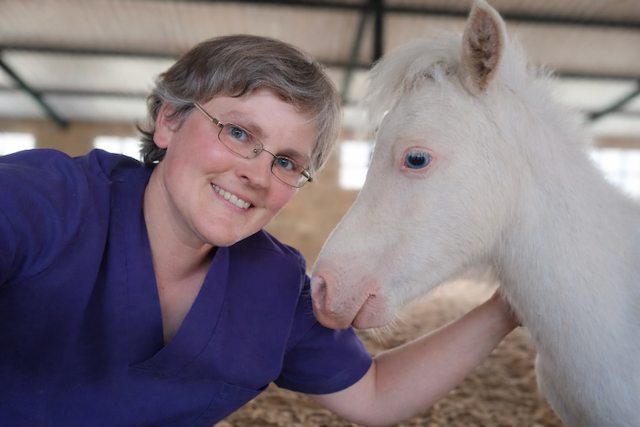
I’m Dr. Carolin Schröder, a veterinarian focused on preventive equine health, helping horse owners support long-term health and welfare through structured, evidence-based management guidance.
My background enables me to help you navigate modern horse care with greater certainty and less unnecessary stress:
The foundations of my work
The foundations of my work
Scientific reasoning in practice:
With 15+ years as a veterinarian (DVM) and a Master’s in Clinical Behavioural Medicine (MSc) and Animal Welfare, I translate scientific research into practical strategies. My focus is on what is supported by evidence and measurable outcomes.
The reality of the barn:
Having managed an international breeding programme for over a decade, I understand the gap between “perfect” theory and the reality of a working barn. I offer solutions that are sustainable for you and effective for your horse, grounded in what can realistically be implemented in everyday life. Working fluently in English, Spanish, and German also allows this guidance to be offered in the language each owner feels most comfortable using.
Analytical clarity:
My Master of Musical Arts (MMA) from Yale University developed my capacity for high-level synthesis and critical thinking. Because equine health problems are rarely one-dimensional, I apply this analytical approach to help you identify patterns, understand interactions, and determine the most effective path forward.
The reality we face together
The goal of my work is not to replace veterinary care; it is to reduce the likelihood that you will need emergency care in the first place. The challenges we face in the stable are reflected in well-documented data. These figures represent the emotional, physical and financial hurdles we navigate as a community:
Colic remains the leading cause of equine mortality and the primary reason for emergency veterinary care. Data from the American Association of Equine Practitioners (AAEP) indicates that up to 10% of horses experience a colic episode each year. Evidence suggests that up to one-third of these cases are influenced by management factors. This creates a significant opportunity to improve outcomes and reduce the risk of costly emergency interventions through informed, proactive care.
Gastric ulcers are similarly prevalent. Clinical reviews indicate that gastric ulcers affect up to 60% of leisure and sport horses, with substantially higher prevalence reported in some performance populations. These estimates are summarized in veterinary resources such as the MSD Veterinary Manual.
Many behavioural problems are now recognised as stress-related responses to gastrointestinal imbalance or environmental mismatch.
These are not isolated issues; they are structural challenges in modern horse management.
Helping horse owners
Veterinary medicine is most useful when it provides practical understanding — clarity about why problems arise, which factors deserve attention, and what can realistically be done both to reduce avoidable risk and to resolve specific problems more effectively.
This support is available both through my online group programme and through individual guidance offered online.
Would you like to make more sense of your horse’s health?
Receive Dr. Schröder’s veterinary insights on equine health topics that matter in everyday horse care, along with relevant updates about her guided programmes.
By signing up, you agree to receive occasional emails from Dr. Schröder in accordance with the Privacy Policy. You can unsubscribe at any time.